
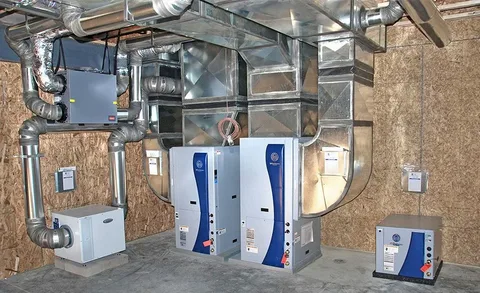
A residential HVAC system is made up of several components that work together to heat, cool, and circulate air throughout a home. While homeowners often think of their furnace or air conditioner as the entire system, many other parts are responsible for controlling temperature, moving air, transferring heat, and maintaining proper airflow.
Understanding the main components of a residential HVAC system can help homeowners recognize how their equipment works and why regular maintenance is important.
Thermostat
The thermostat is the control center of a residential HVAC system. It monitors indoor temperature and communicates with the heating or cooling equipment based on the temperature setting.
When the home becomes too warm, the thermostat can signal the air conditioning system to begin a cooling cycle. When the temperature drops below the selected setting, it can signal the heating system to operate.
Modern thermostats may also provide programmable schedules, remote access, and other controls that allow homeowners to manage indoor comfort more efficiently.
Furnace
The furnace is the primary heating component in many residential HVAC systems. Depending on the type of furnace, it uses a fuel source or electricity to generate heat.
In a forced-air system, air passes through the furnace and is warmed before being distributed throughout the home.
A furnace typically includes components such as burners or heating elements, a heat exchanger, blower motor, and safety controls. Regular maintenance helps these parts operate properly and can help identify potential problems before they affect heating performance.
Air Conditioner
The air conditioner is responsible for cooling indoor spaces during warm weather. A central air conditioning system typically consists of indoor and outdoor components that work together to transfer heat from inside the home to the outdoors.
The indoor portion includes the evaporator coil, while the outdoor unit typically contains the compressor, condenser coil, and fan.
Rather than simply producing cold air, the air conditioner removes heat from indoor air and releases that heat outside.
Heat Pump
Some homes use a heat pump instead of, or in addition to, a traditional furnace and air conditioner.
A heat pump can transfer heat in either direction. During cooling, it removes heat from inside the home and releases it outdoors. During heating, the process reverses and heat is transferred into the home.
Because a heat pump can provide both heating and cooling, it can serve an important role in a home’s overall HVAC system.
Evaporator Coil
The evaporator coil is located in the indoor portion of many central air conditioning systems.
During a cooling cycle, refrigerant moves through the coil while warm indoor air passes over it. Heat from the indoor air is absorbed by the refrigerant, allowing cooler air to continue through the home’s ductwork.
A dirty or damaged evaporator coil can affect heat transfer and overall cooling performance, which is why it should be inspected and maintained as part of professional HVAC service.
Condenser Coil
The condenser coil is generally located inside the outdoor unit.
After the refrigerant absorbs heat from the home, it carries that heat to the outdoor unit. The condenser coil helps release the heat into the outside air.
Dirt, leaves, grass, and other debris around the outdoor equipment can interfere with airflow across the condenser coil. Keeping the area around the outdoor unit clear can help support proper operation.
Compressor
The compressor is one of the central components of a traditional air conditioning or heat pump system.
It circulates refrigerant through the system and raises the refrigerant’s pressure and temperature as part of the refrigeration cycle.
Because the compressor plays such an important role, a compressor problem can significantly affect the system’s ability to cool or heat the home.
Blower Motor
The blower motor moves air through the HVAC system.
During heating, it helps distribute heated air through the ductwork. During cooling, it moves indoor air across the evaporator coil and then distributes the conditioned air throughout the home.
Problems with the blower motor can result in weak airflow, unusual sounds, or inconsistent temperatures between rooms.
Ductwork
Ductwork provides the pathways that move conditioned air throughout the house.
Supply ducts carry heated or cooled air from the HVAC equipment to individual rooms. Return ducts carry indoor air back toward the HVAC system so it can be conditioned again.
Damaged, disconnected, poorly insulated, or leaking ducts can reduce airflow and affect comfort. Proper duct design and maintenance are important parts of an effective residential HVAC system.
Air Filters
Air filters help capture airborne particles before air moves through the HVAC equipment.
A filter that becomes heavily loaded with dust and debris can restrict airflow. This may make the system work harder and can affect comfort and equipment performance.
Filter replacement frequency depends on factors such as the filter type, household conditions, pets, indoor air quality, and manufacturer recommendations.
Supply Vents and Registers
Supply vents and registers are the points where conditioned air enters the rooms of a home.
They are connected to the supply ductwork and distribute heated or cooled air throughout the living space.
Homeowners should avoid blocking these vents with furniture, rugs, curtains, or other objects because restricted airflow can affect the distribution of conditioned air.
Return Air Vents
Return vents allow indoor air to travel back toward the HVAC equipment.
Once air returns through the system, it can pass through the filter and then be heated or cooled again.
Return vents are just as important as supply vents because the HVAC system needs proper airflow to operate effectively. Blocked or undersized return pathways can contribute to airflow problems.
Refrigerant Lines
In air conditioning and heat pump systems, refrigerant lines connect the indoor and outdoor components.
These lines allow refrigerant to travel through the system as it absorbs and releases heat.
Issues such as refrigerant leaks or damaged lines can affect system performance and should be evaluated by a qualified HVAC professional.
Electrical Components and Controls
Residential HVAC systems rely on electrical components to operate motors, fans, compressors, controls, and other equipment.
Depending on the system, these components can include capacitors, contactors, relays, circuit boards, wiring, disconnects, and other controls.
Electrical problems can cause an HVAC system to stop working or operate improperly. Because electrical components can present safety hazards, repairs should be handled by qualified professionals.
Drainage System
Air conditioning systems naturally produce condensation as warm indoor air passes over the cold evaporator coil.
That moisture collects in a drain pan and is directed away through a condensate drain system.
A clogged drain can cause water to back up and potentially lead to leaks or water damage. Regular inspection can help identify drainage problems before they become more serious.
How These Components Work Together
The components of a residential HVAC system do not operate independently. They work together as part of a coordinated process.
For example, during a cooling cycle:
- The thermostat detects that cooling is needed.
- The system activates the appropriate equipment.
- The compressor circulates refrigerant.
- Indoor air moves across the evaporator coil.
- Heat is transferred from the indoor air to the refrigerant.
- The blower moves the cooled air through the supply ducts.
- Conditioned air enters the rooms through supply vents.
- Warm indoor air returns through return vents.
- The refrigerant carries absorbed heat to the outdoor unit.
- The condenser releases that heat outside.
The heating process uses many of the same airflow components while relying on the furnace, heat pump, or another heating source to provide the necessary heat.
Why HVAC Maintenance Is Important
Because so many components work together, a problem with one part can affect the performance of the entire system.
Routine HVAC maintenance can include inspecting equipment, checking electrical connections, examining coils, evaluating airflow, checking filters, inspecting drainage, and testing system operation.
Homeowners can also help by changing filters as recommended, keeping vents unobstructed, and keeping debris away from outdoor equipment.
Signs Your HVAC System May Need Service
A residential HVAC system may need professional attention if you notice:
- Weak or inconsistent airflow
- Uneven temperatures
- Unusual noises
- Strange odors
- Frequent cycling
- Increasing energy use
- Water around indoor equipment
- Poor heating or cooling performance
- A system that struggles to reach the thermostat setting
- Equipment that repeatedly shuts down
Addressing these signs early can help identify the source of the problem before it affects additional components.
Why Choose Air Factory Heating and Cooling?
A residential HVAC system depends on many components working together correctly. Air Factory Heating and Cooling helps homeowners address heating and cooling needs by evaluating system performance and identifying issues affecting comfort.
Whether a system needs routine maintenance, repair, replacement, or attention to a specific component, professional HVAC service can help homeowners understand the condition of their equipment and determine the appropriate next step.
Keep Your Residential HVAC System Working Properly
From the thermostat and furnace to the air conditioner, blower, ductwork, filters, coils, and electrical controls, every component has a role in maintaining indoor comfort.
Understanding these components makes it easier to recognize why regular maintenance matters and why seemingly small problems should not always be ignored.
If your HVAC system is producing unusual sounds, experiencing airflow problems, struggling to maintain temperature, or showing other changes in performance, a professional inspection can help identify the cause and keep your home comfortable.