
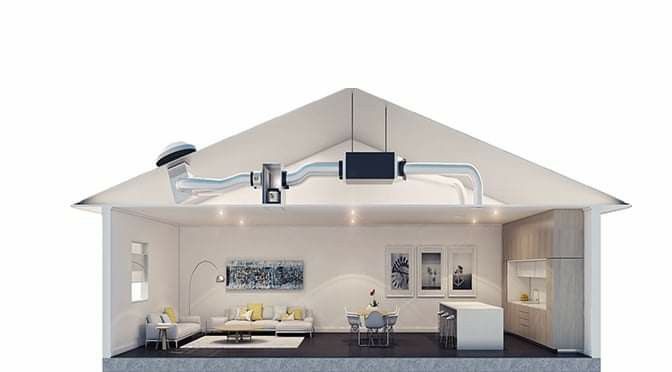
Proper home ventilation plays an important role in maintaining indoor comfort and air quality. A well-ventilated home allows stale air, excess moisture, odors, and airborne pollutants to leave while helping bring in fresh air. Without adequate ventilation, indoor air can become stagnant and uncomfortable, particularly in homes that remain closed up for long periods.
Ventilation also works alongside your heating and cooling system. When airflow and ventilation are properly managed, your HVAC system can distribute conditioned air more effectively while helping maintain a healthier and more comfortable indoor environment.
What Is Home Ventilation?
Home ventilation is the process of exchanging indoor air with outdoor air or moving air throughout the home to prevent it from becoming stagnant.
Ventilation can occur naturally through windows, doors, and building openings, or mechanically through systems such as exhaust fans, air handlers, fresh-air systems, and other HVAC equipment.
A properly designed ventilation system helps control the movement of air rather than simply increasing the amount of air circulating indoors.
Helps Improve Indoor Air Quality
One of the primary reasons ventilation is important is its role in indoor air quality. Everyday activities can introduce particles, odors, and other contaminants into the air.
Cooking, cleaning, bathing, pets, building materials, and household products can all affect indoor air. Without sufficient ventilation, these airborne substances may remain indoors for longer periods.
Proper ventilation helps remove stale indoor air and replace it with fresher air, supporting better overall indoor air quality.
Helps Control Excess Moisture
Moisture is naturally produced inside homes through activities such as cooking, showering, washing clothes, and even normal breathing.
When moisture cannot escape, it can contribute to condensation and create conditions that may encourage mold and mildew growth.
Bathrooms and kitchens are particularly important areas for ventilation. Exhaust fans can help move humid air outside instead of allowing moisture to accumulate on walls, ceilings, windows, and other surfaces.
Reduces Lingering Household Odors
Odors from cooking, pets, cleaning products, and other everyday activities can linger when indoor air is not properly exchanged.
Ventilation helps move unwanted odors out of the home. Kitchen range hoods, bathroom exhaust fans, and other ventilation equipment can be especially useful for removing odors near their source.
Simply circulating the same indoor air does not necessarily remove the source of an odor. Proper ventilation helps replace stale air instead.
Supports Better Temperature and Comfort Control
Ventilation and HVAC airflow are closely connected to indoor comfort. When air does not move properly, some rooms may feel warmer or cooler than others.
Poor airflow can contribute to:
- Stuffy rooms
- Uneven temperatures
- Reduced comfort
- Excessive humidity
- Increased HVAC runtime
A properly balanced HVAC and ventilation system can help air move more effectively throughout the home.
Helps Your HVAC System Operate More Effectively
Your heating and cooling system depends on proper airflow to operate as intended. Restricted or poorly managed airflow can make the equipment work harder to maintain the desired temperature.
Ventilation is not the same as heating or cooling, but the systems work together as part of the home’s overall air management.
Keeping air pathways clear, maintaining filters, and addressing ventilation problems can help support proper HVAC operation.
Helps Prevent Stale Indoor Air
A home can feel stuffy when there is not enough air exchange. This is particularly common when windows and doors remain closed for long periods.
Stale air may be noticeable through persistent odors, stuffiness, or rooms that feel uncomfortable even when the thermostat shows an appropriate temperature.
Adequate ventilation helps reduce this buildup by allowing indoor air to be exchanged or exhausted as needed.
Ventilation Is Especially Important in Tightly Sealed Homes
Modern homes are often designed to reduce unwanted air leakage. Better sealing can improve energy efficiency, but it also means that homes may require intentional ventilation to maintain appropriate air exchange.
A tightly sealed home does not automatically have poor indoor air quality. However, it does make proper ventilation planning more important.
Mechanical ventilation can help provide controlled air exchange without relying entirely on random air leakage through gaps and openings.
Common Signs of Poor Home Ventilation
Homeowners may notice several signs when ventilation is inadequate.
These can include:
- Persistent stuffy air
- Lingering odors
- Condensation on windows
- Excess humidity
- Musty smells
- Rooms that feel uncomfortable or stagnant
- Visible moisture buildup
- Excessive dust
- Bathroom moisture that takes a long time to clear
These signs can have multiple possible causes, so they do not automatically confirm a ventilation problem. However, persistent issues should be investigated.
How to Improve Home Ventilation
There are several practical steps homeowners can take to improve air movement and ventilation.
Use Exhaust Fans
Bathroom and kitchen exhaust fans should be used when generating moisture, odors, or airborne particles. Make sure exhaust fans are properly vented rather than simply moving air into an attic or enclosed space.
Replace HVAC Filters
A dirty air filter can restrict airflow and reduce the effectiveness of your HVAC system. Follow the equipment manufacturer’s recommendations for checking and replacing filters.
Keep Air Vents Unobstructed
Furniture, curtains, rugs, and other objects should not block supply or return vents. Clear airflow pathways help the HVAC system distribute conditioned air throughout the home.
Use Natural Ventilation When Appropriate
Opening windows and doors can provide natural ventilation when outdoor conditions are suitable. However, outdoor temperature, humidity, pollen, air pollution, and other conditions should be considered before relying on open windows.
Consider Professional Ventilation Assessment
If your home continues to feel stuffy or has persistent moisture and airflow problems, an HVAC professional can evaluate the system and determine whether improvements to ventilation or airflow are appropriate.
Does Ventilation Increase Energy Costs?
Ventilation can affect energy use because outdoor air may need to be heated or cooled after entering the home. However, proper ventilation does not necessarily mean leaving windows open continuously.
Controlled ventilation can help balance indoor air quality and energy efficiency. Depending on the home’s design, climate, and HVAC equipment, a professional may recommend an approach that provides appropriate air exchange without unnecessarily increasing heating or cooling demand.
When Should You Have Your Ventilation System Checked?
Consider having your HVAC and ventilation setup evaluated if you consistently experience excessive humidity, persistent odors, poor airflow, condensation, or rooms that feel unusually stuffy.
A professional inspection can help determine whether the issue is related to ventilation, ductwork, filtration, HVAC performance, insulation, or another factor.
Regular HVAC maintenance is also important because problems with airflow and equipment performance can affect overall indoor comfort.
Why Choose Air Factory Heating and Cooling?
Proper ventilation is an important part of a comfortable home, but it needs to work alongside the heating and cooling system. Air Factory Heating and Cooling can help homeowners evaluate HVAC performance, airflow, and related concerns that may affect indoor comfort.
Whether you are dealing with inconsistent temperatures, weak airflow, excessive humidity, or a home that feels consistently stuffy, professional HVAC service can help identify potential causes and determine the appropriate next steps.
Conclusion
Proper home ventilation helps maintain fresh indoor air, manage moisture, reduce lingering odors, and support comfortable airflow throughout the home. It is especially important in modern homes that are tightly sealed for energy efficiency.
Good ventilation does not mean simply bringing in as much outdoor air as possible. The goal is controlled and appropriate air exchange that works with your home’s HVAC system.
If your home feels stuffy, has persistent moisture problems, or experiences inconsistent airflow, evaluating the ventilation and HVAC system can be a useful first step toward improving indoor comfort.